Second Martian Invasion
Last and First MenThe Second Martian Invasion was a renewed assault by the Martians that turned a brief military struggle into a long biological and social disaster for the Second Men. The invaders adapted to terrestrial weapons, ravaged the planet while carrying its water and vegetation back to Mars, and left behind microscopic agents that continued the war after the clouds themselves had been destroyed. The Second Men won the immediate conflict, but the infection permanently weakened generations and left a smaller, damaged population to rebuild civilization.
The Return and the Assault
Some years after the first invasion, the Martians appeared again in far greater force. Their return overturned the limited security the Second Men had gained from their previous encounter: the invaders were now almost immune to offensive radiation, the weapon that had dispersed the earlier cloud. Their appearance also offered a new opportunity to study beings whose nature and place in the universe had remained uncertain, but that prospect was soon eclipsed by the scale of the attack.
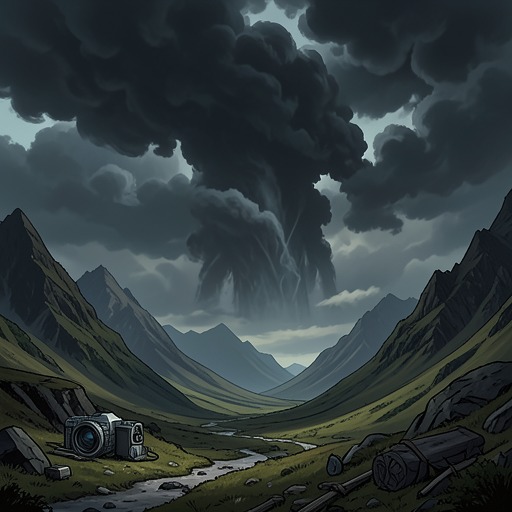
The Martians operated simultaneously from the alpine regions of the world. They began by drying up great rivers at their sources, then spread into jungles and cultivated country, stripping away vegetation across vast areas. The devastation advanced from valley to valley; in whole countries, the account records, no green growth remained. The Martians carried water and food materials back to Mars through myriads of specialized Martian Subvital Units, each transporting a few molecules of the material. This traffic continued while the main body explored and plundered the planet.
Their forms changed with the task. To absorb water and leafage, they spread across the countryside as an impalpable mist that human beings could not dispel. To attack settlements, they gathered into enormous cloud-jellies, larger than the being formed during the first invasion. Cities were flattened, people were killed, and attempts to defeat the attackers with successive weapons failed. The invasion thus combined resource extraction with direct destruction: water and vegetation were removed for the Martians' use, while the human structures surrounding those resources were crushed.
Radiation, Intelligence, and the Diamonds
The invaders eventually found the source of terrestrial radiation in the planet's many wireless transmitting stations. They interpreted these immobile arrangements of glass, metal, and vegetable compounds as the physical basis of terrestrial intelligence, but judged them radically inferior to the organization of a Martian cloud. Their discovery registers a sharp reversal in perspective: the Martians recognized the technical source of human radiation while construing humanity itself as subordinate to the apparatus it maintained.
A separate encounter over diamonds gave the Second Men another, more ambiguous clue to the invaders' nature. The Martians found a town's mayor wearing a large diamond between her breasts while she directed an evacuation. To the invaders, the stone was sacred, and its use as an insignia appeared to reduce it to a device for identifying people. They were also disturbed by diamonds embedded in cutting instruments. These encounters helped transform the struggle into what the account describes as a crusade, rather than a conflict governed only by the Martians' acquisition of water and plant matter.
By then, the Second Men had developed an effective counterattack: high-tension electricity, discharged as artificial lightning, could kill the Martian clouds. Yet the Martians continued trying to save the diamonds even after the human attack had become effective and a rich store of water and vegetation had already been secured. The dying remainder carried the stones to mountain ridges and arranged them in glittering lines along the rocks before succumbing. The Second Men later found the hoard there. Because the stones had been separated from their settings and carefully placed, this act persuaded some observers that the invaders had possessed conscious purpose. But the evidence did not settle how developed that consciousness was: the same conduct suggested an attachment to treasure while appearing no more intelligent than instinctive animal behavior. With all the clouds destroyed, there was no chance to test that interpretation.
Victory and the Delayed Infection
The fighting lasted only a few months. Its immediate material damage, though serious, was judged recoverable, and the invasion initially had an invigorating effect on the Second Men. A prosperous and secure society was forced to exercise its reserves of loyalty and courage against an overwhelming danger. The crisis also made their understanding of tragedy concrete. They had accepted the possibility of public disaster in theory; now they sought to face and absorb it rather than curse their gods or appeal to them for rescue.
The military victory, however, concealed the most consequential aftereffect. After the Martian clouds died, their Martian Subvital Units remained dispersed over the planet as an ultra-microscopic dust. While incorporated into the living cloud, these units could enter human bodies without causing permanent harm. Freed from their role in the larger organism, they became a predatory virus. Once inhaled, they adapted to the human environment and disrupted the tissues they entered. The Second Men had defeated the Martian super-individual, yet remnants of its component life-forms were now damaging the human population from within.
The resulting illness reduced a society with an unusually strong physical constitution to widespread debility. Loss of water proved comparatively slight, but the destruction of vegetation across the war zones caused a famine unknown to the Second Men, and the damage to the material fabric of civilization required decades of reconstruction. Research eventually found a means to check the infection, and years of rigorous purging cleared both the atmosphere and human flesh. That intervention stopped the disease from continuing in the same way, but it could not reverse the harm already done: the generations that had been infected never recovered because their tissues had been too severely corroded.
Population and Historical Consequences
A new population of healthy people gradually arose, but it remained small because the fertility of those who had been stricken was greatly reduced. For years, ageing invalids continued to perform the work of the world despite their frailty. Over time, however, they lost endurance and competence, while young people were compelled to assume responsibilities before they were prepared and made errors their elders would not have made. The invasion's aftermath was therefore not a single episode of sickness but a prolonged transfer of responsibility under conditions of declining health, reduced fertility, and disrupted knowledge.
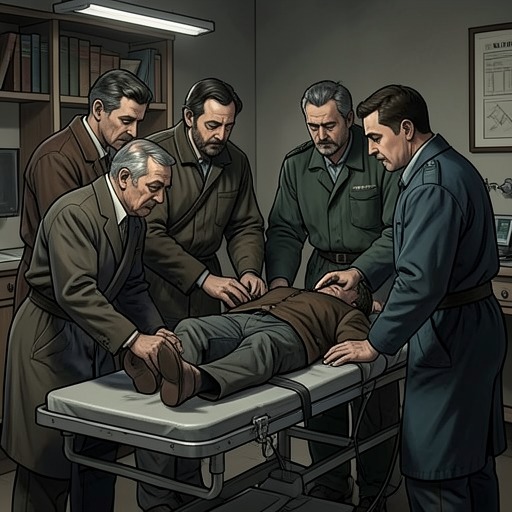
The Second Men responded to that crisis through a decision that extended the consequences of the invasion into their social ethics. When an individual was judged by their generation to have outlived their competence, the stricken were to choose suicide. Younger people initially opposed the policy, citing their elders' continued wisdom and their own fear of carrying on without them. The elders insisted that the damaged generations should withdraw if the body politic was to survive the economic emergency. One by one, they chose what the account calls the peace of annihilation, leaving a population that was scanty and inexperienced but physically vigorous enough to rebuild.
The Second Martian Invasion thus has two endings. The first is the destruction of the invading clouds by artificial lightning; the second is the slower reckoning with the virus, reduced fertility, and lasting debility they left behind. The diamonds preserved on the mountain ridges remained a striking trace of the Martians' unexplained purpose, while the infection made the deeper cost unmistakable: an enemy could be defeated as an organized whole and still persist in fragments capable of reshaping the victors' society.